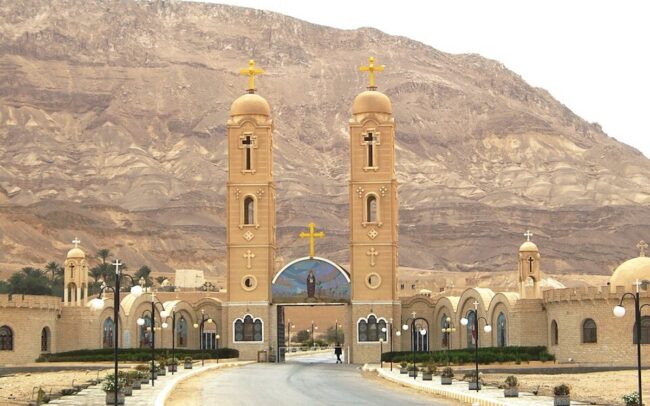
St. Anthony’s Monastery
Nestled in the towering bare-rock mountains next to the Red Sea, this is the birthplace of Christian monasticism.

Nestled in the towering bare-rock mountains next to the Red Sea, this is the birthplace of Christian monasticism.
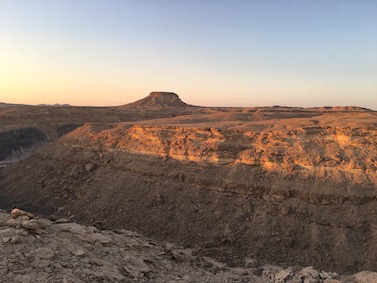
While at the Red Sea coast, in the cooling evening, we will trek (by Jeep 4x4s) into the Eastern desert to visit a Bedouin camp and experience their culture and hospitality.
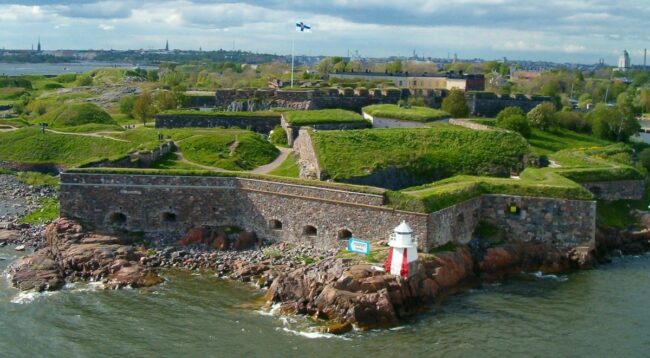
An 18th-century fortress originally built by Sweden to protect against a Russian invasion, it is home to several museums, serves as a vibrant artistic community, and home to around 1,000 full-time residents. We’ll visit the Suomenlinna and Military Museums, while giving you time to explore the island, which has extensive trails. Enjoy a lunch or…

A modern capital compared to others in Europe and the second-northernmost capital city in the world. Helsinki showcases a city that has embraced technology and progressive urban planning, while maintaining the charm seen in smaller cities. We’ll visit the Eduskunta (Finnish parliament), the National Museum, the City Museum, Mannerheim house, and Tamminiemi presidential museums.
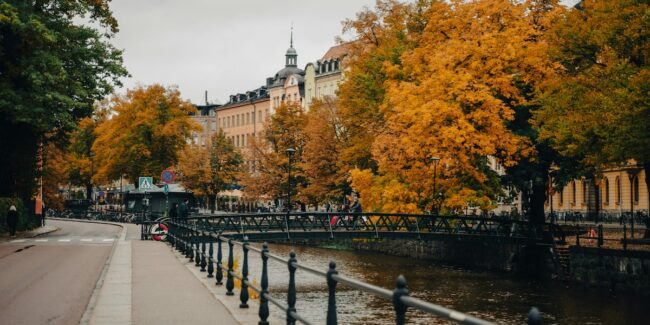
As the traditional center of religion in Sweden, it was also home to Gustav Vasa, who established Sweden’s independence from Denmark in the 1500s. You will get to spend your free time exploring the city to visit Uppsala Cathedral (where kings of Sweden are coronated and home to several tombs of past kings), walk streets…
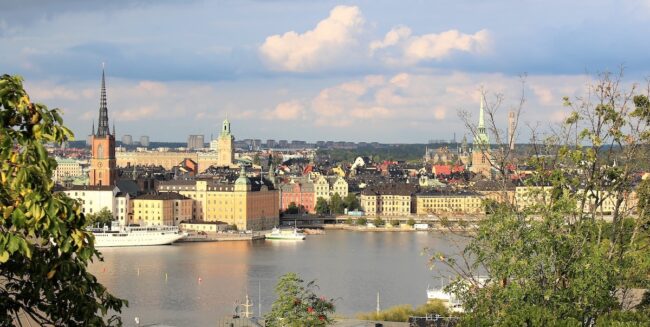
The program begins in beautiful Stockholm, which still has a wonderful medieval center surrounded by modern architecture outside Gamla Stan (Old Town). We’ll get to tour the Royal Palace, the Riksdag (Swedish Parliament), and Skansen (an open-air folk museum popular in Scandinavia).
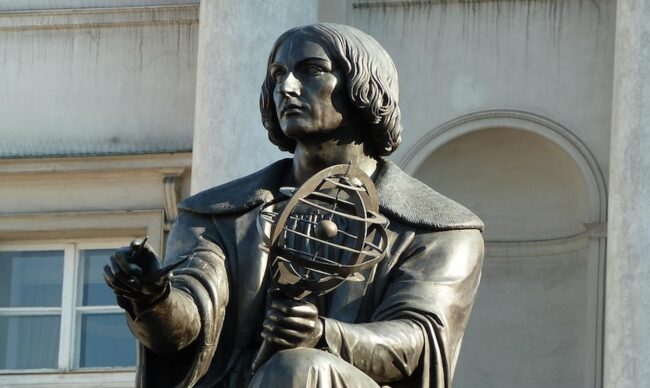
We will visit the U.S. Embassy in Warsaw and receive a country briefing led by a current U.S. Foreign Service Officer (FSO) to learn about historical and contemporary economic and political conditions in Poland and the current relationship between our two countries.

We take a walking tour of Kraków, known for its well-preserved medieval core and Jewish quarter. We will walk through the historic old town, the stately market square of Rynek Glówny, stroll through Planty Park, and see the remnants of the city’s medieval walls.

We will visit Warsaw, a city of rich history, resilience, reconstruction, and a deep appreciation for the arts. It is a city with a growing international atmosphere, and one that honors its past, especially its devastating WWII history of near-total destruction.

Located along the Gulf Coast, the Celestún Biosphere Reserve is a protected coastal region known for its rich biodiversity, vibrant flamingo population, and striking pink salt lagoons. Students explore mangrove and wetland ecosystems while learning about conservation efforts, traditional salt production, and the environmental challenges facing coastal communities.
"*" indicates required fields