

None. All courses are taught in English.
Hotels, 2-4 per room.
Mandatory orientation on Saturday, April 10, 2027 in Bowling Green, KY. See Orientation for more information.
KIIS Berlin & Barcelona takes full advantage of two diverse and vibrant cities in Germany and Spain. The program begins in Barcelona, a cosmopolitan seaport on Spain’s Mediterranean coast. Walking through this city reveals its Roman past, distinct Gothic Quarter, sublime modernist expansions, and experimental contemporary architecture. The program then moves to Berlin, in the vibrant and centrally located Prenzlauer Berg district. Here students have a unique chance to explore Germany’s thriving art, culture, and history. Classes are divided between formal classwork, field workshops, and guided excursions that provide students direct contact with the cities and their museums, galleries, cafés, and parks.
Note: Studying abroad likely is more physically strenuous than you are used to at home. KIIS study abroad programs typically involve approx. 5-10 miles of walking (approx. 10,000-20,000 steps) or the like in a day, including the possibility of walking, hiking, and climbing stairs in heat and humidity, over elevations at higher altitudes, and over rocky terrain. See Health & Wellness for more information.
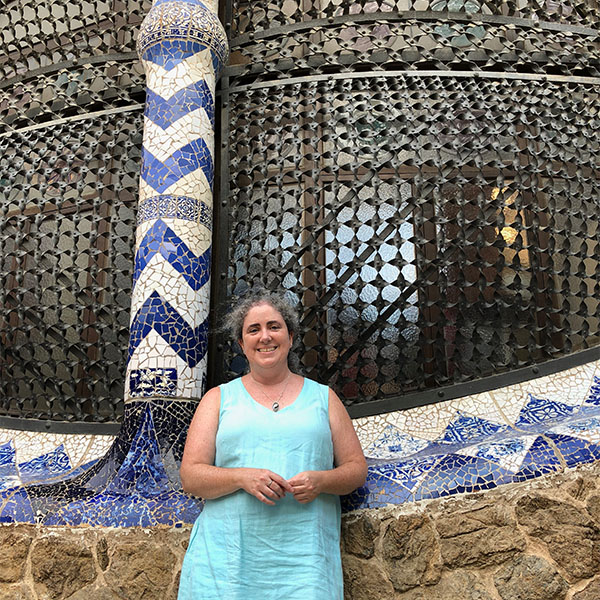 I am a Professor of Art History at Berea College, where my teaching is far-ranging, from Medieval Europe to Contemporary art across the world. I have had the privilege of teaching abroad with students in the KIIS consortium since 2005, with a focus on Barcelona, though also Berlin, Amsterdam, Argentina, and more. I look forward to another amazing summer in Berlin and Barcelona.
All courses are taught in English and are 3 credit hours. You may enroll in 1-2 courses.
All KIIS course credit is awarded by Western Kentucky University. Please speak to your home campus advisor or study abroad office for course equivalencies. Grades will be transferred to your home institution in mid-August after the completion of the program. For more information, visit Transcripts & Grades.
Earn up to 6 Credit Hours
Group Flight (Optional)
Airport Transfers in Berlin & Barcelona
Accommodations
Daily Breakfast
Groups Excursions & Transport
Berlin & Barcelona Metro Passes
Medical Insurance
Security Evacuation Protection
Program Director & Faculty on-site 24/7
To help you budget, keep in mind that you are responsible for the cost of obtaining a passport ($165), two meals per day + personal expenses (approx. $600-$1100 depending on your food tastes/spending habits/optional independent travel preferences), any class readings/materials, and any fees from your college/university.
Although KIIS tries to foresee all possible expenses in formulating program fees, please note that dramatic fluctuations in foreign currency valuations and/or airline surcharges may affect the total cost of the program.
The Berlin-Barcelona program does not offer a group flight option. You will purchase your own multi-city roundtrip airfare, USA-Barcelona / Berlin-USA. (The group transfer between Barcelona and Berlin is included in the program.)
You must plan to arrive in Barcelona on May 21. Flights to Spain are typically overnight flights which means you must depart the USA by May 20. The program concludes on June 15 in Berlin. Return flights from Germany to the USA are typically the same day.
Visit Flights and Passports & Visas for more information.
"*" indicates required fields